Arcade-Style Controllers
Arcade-style controllers offer the closest experience to playing on a real Taiko no Tatsujin arcade cabinet at home. Their full-sized playing surfaces, wooden construction, and realistic playing feel make them popular among dedicated players, but they also come with higher costs and greater space requirements.
This page explains what makes ASCs different, who they’re best suited for, and provides an overview of the most popular models currently available.
On this page
What Are Arcade-Style Controllers?
Arcade-style controllers, commonly referred to as ASCs, are premium drum controllers designed to recreate the experience of playing on an official arcade cabinet as closely as possible.
While their larger size is immediately noticeable, the difference goes far beyond that. Most ASCs feature a full-sized 43 cm (17 in.) drum surface, wooden construction, and piezoelectric sensors, with premium models often incorporating metal reinforcement to more closely replicate the feel of an arcade cabinet. Together, these provide a more realistic playing feel with stronger rebound and improved responsiveness.
The larger drum also offers practical advantages. The increased surface area makes positioning more forgiving and makes accurate don and ka hits easier, particularly during faster or more technical patterns. Combined with a standing playing position, these characteristics make techniques learned at home transfer more naturally to arcade play.
Compared to compact controllers, arcade-style models are typically:
- Full arcade diameter - approximately 43 cm (17 in.)
- Built using wooden components with piezoelectric sensors
- Greater rebound and a more arcade-like playing feel
- Larger surface area that makes positioning more forgiving
- Closer to the size, feel, and ergonomics of an official arcade cabinet
These improvements come with trade-offs. ASCs are significantly larger, heavier, louder, and more expensive than compact controllers, making them best suited to players who prioritise the arcade experience over portability or affordability.
Should You Buy An ASC?
For many players, an ASC offers the closest experience to playing on an official arcade cabinet at home. The larger drum size, realistic rebound, and improved playing feel make them ideal for practicing techniques that translate naturally to arcade play.
However, they aren’t the right choice for everyone.
ASCs typically cost several times more than compact controllers and require considerably more space. Most weigh over 6 kg (13 lb) and are designed to remain in a dedicated playing area rather than being packed away after each session. They also produce more noise and vibration, which may not be suitable for apartments or shared living spaces.
If you’re a casual player, have limited space, or simply want an affordable way to enjoy Taiko at home, a compact controller is still an excellent option. Modern compact controllers are capable of supporting very high-level play, and many experienced players continue to use them regularly.
Ultimately, choosing between a compact controller and an ASC comes down to your budget, available space, and how closely you want to recreate the arcade experience.
Featured Controllers
The controllers covered below are among the most established ASCs currently available. Each has been widely used and independently reviewed by the Taiko community, making them the easiest to research and compare.
Several newer ASCs have also entered the market, including HanTaiko and TaikoCatz. While early impressions have generally been positive, they currently have much smaller owner communities and fewer long-term reviews than the controllers featured below.
As a result, there is currently less independent information available regarding their long-term reliability, durability, and ownership experience. As these controllers become more widely adopted, they may be added alongside the models featured in this guide.
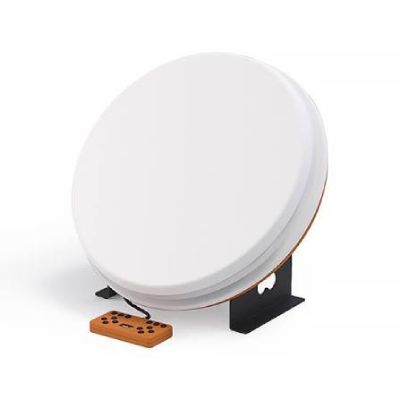
GAMO2 / DJDAO - Taikoller
The Taikoller is one of the most well-known ASCs available and is often considered the benchmark against which other ASCs are compared. Its robust construction, extensive configurability, and large community of long-term owners have made it a popular choice for players looking to recreate the arcade experience at home.
 |
|---|
| The Taikoller, with its integrated control box. |
Pros
- Excellent build quality with a durable enclosed housing
- Wooden construction with metal reinforcement, resulting in a responsive playing feel with strong rebound
- Taikoller Options companion software allows extensive controller configuration on PC
- Integrated e-box with controls (control box) and onboard display allows quick platform switching without changing hardware
Cons
- Some Rhythm Festival PC users may need to adjust the Hold Time or Mode settings for optimal performance
- Firmware updates have been relatively infrequent compared with some newer controllers.
Good to Know
- Weighs approximately 6.2 kg (13.6 lb)
- Firmware can be updated when new versions are released
- Community modifications and replacement parts are widely available
- Enclosed rear housing helps protect the internal assembly from dust and accidental knocks
Best For
Players looking for a proven, highly configurable ASC with excellent community support and a long-established reputation. The Taikoller prioritises ease of use and a polished ownership experience while delivering excellent arcade-style playability.
Rythmagica - TDC17
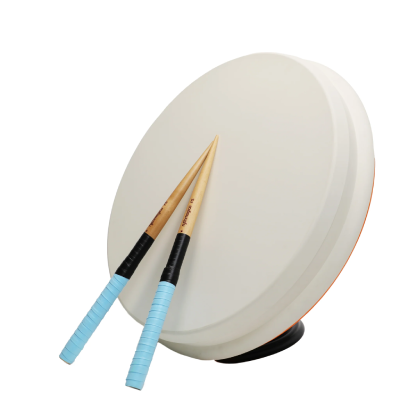
The TDC17 is Rythmagica’s flagship ASC, combining a full-sized drum surface with a modern feature set and active software support. Building on the success of the TDC10, it focuses on offering a highly configurable controller with strong value, active firmware development, and a modern software ecosystem.
 |
|---|
| The TDC17, with its included “F5” bachi. |
Pros
- Excellent value for an ASC
- Regular firmware updates with ongoing feature improvements
- The companion TDC Mate software allows firmware updates and controller configuration via Bluetooth
- Integrated navigation hit zones reduce the need for a separate controller when navigating menus
- Responsive customer support with active firmware development
Cons
- Overall fit and finish may not feel quite as premium as other options
- Optional tripod is functional but less elegant than some dedicated stands
- Drum surface has slightly more friction than some competing controllers, although this is generally negligible during normal play
Good to Know
- Manufactured by Rythmagica, the company behind the TDC10 compact controller
- Weighs approximately 6.3 kg (14 lb)
- Continues to receive active firmware development with new features and improvements
- VESA mounting support for custom setups
- Optional tripod available for purchase
- Enclosed rear housing protects the internal assembly.
- Ships with a pair of Rythmagica “F5” bachi.
Best For
Players looking for a modern, feature-rich ASC that offers excellent value, active software support, and extensive configuration options. The TDC17 focuses on value, modern features, and active software support.
Yuancon - Taiko Force LV6
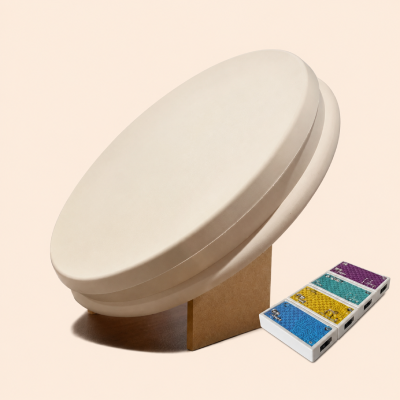
The Taiko Force LV6 is the latest generation of the long-running Taiko Force series. Designed with enthusiasts in mind, it combines an arcade-inspired internal design with a modular e-box system, making it one of the most customisable ASCs currently available.
 |
|---|
| The Taiko Force LV6, alongside its different e-boxes. |
Pros
- Native PS5 support available through a dedicated e-box
- Independent low-latency audio output through compatible e-boxes
- Extensive software options, including sensitivity, key mapping, and hit modes
Cons
- Premium price
- Additional e-boxes increase the cost if you play on multiple platforms
- Configuration is more involved than some other controllers
Good to Know
- Weighs approximately 8.2 kg (18 lb)
- Highly configurable through dedicated Taiko Force Setting software, without need for hardware modification
- Broad platform compatibility through interchangeable e-boxes
- Uses the same internal drum connector as ZhongTaiko, allowing compatible e-boxes from either manufacturer to be used interchangeably.
- Ships with a foam noise-reduction mat and a pair of maibachi.
Best For
Players who enjoy fine-tuning their controller and want extensive control over configuration, sensitivity, and multi-platform compatibility. The Taiko Force LV6 is designed for enthusiasts, offering extensive configurability and an arcade-inspired construction.
ZhongTaiko
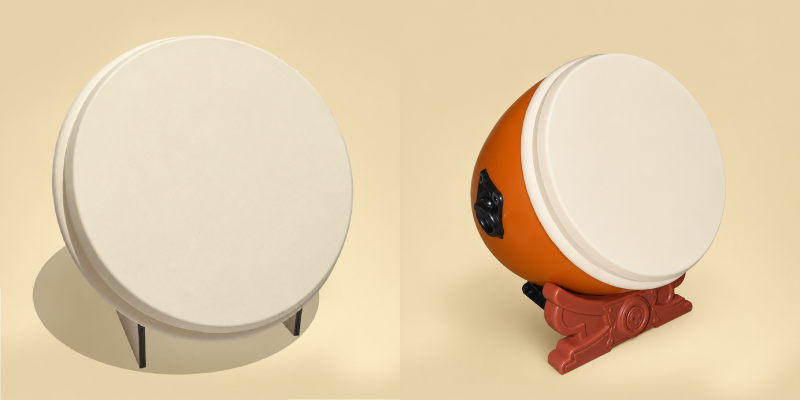
ZhongTaiko is an arcade-style controller designed to closely replicate the construction and feel of an official arcade drum. With two distinct configurations as well as a modular e-box system, it offers players a range of options while maintaining a strong focus on arcade authenticity.
 |
|---|
| The ZhongTaiko standard model (left) and Pro model with drum body (right). |
Pros
- Excellent rebound and responsive playing feel
- Arcade-inspired plywood construction with metal reinforcement
- Available in Standard and Pro configurations to suit different budgets and preferences
Cons
- Multiple versions and revisions can make buying confusing
- Less English-language documentation than competing controllers
- Premium price, particularly for the Pro configuration and/or the drum body inclusion
Good to Know
- Official repair service and replacement parts are available through ZhongTaiko.
- Broad platform compatibility through interchangeable e-boxes
- Uses the same internal drum connector as Taiko Force LV5/LV6, allowing compatible e-boxes from either manufacturer to be used interchangeably.
- Sensitivity is adjusted using physical knobs on the e-box rather than companion software.
- Ships with a pair of ZhongTaiko “THE ONE” bachi, foam noise-reduction mat, anti-slip mat, and replacement piezo sensor.
Best For
Players looking for an ASC that closely follows the construction and feel of an arcade drum, and who don’t mind researching the available versions before purchasing. ZhongTaiko places a strong emphasis on faithfully recreating the arcade drum through its construction and modular e-box system.
Read Next ➡️
🚧 taiko.guide is currently under active development.
Documentation is being added and expanded over time, so some sections may be incomplete or marked as work in progress.